

El factor de protección solar (FPS) se suele malinterpretar como una medida de tiempo en lugar de una medida de exposición. En términos técnicos, el FPS mide la protección contra los rayos UVB, que son los principales responsables de las quemaduras solares.
Comprender la métrica SPF más allá de las cifras
Es un error común pensar que un factor de protección solar (FPS) de 100 es el doble de efectivo que uno de 50. La relación no es lineal; un FPS de 50 filtra aproximadamente el 98 % de los rayos UVB, mientras que un FPS de 90 filtra alrededor del 99 %. Un aumento del 1 % puede parecer insignificante en un laboratorio de pruebas. Sin embargo, bajo el intenso sol del desierto, cada pequeña fracción cuenta.
El verdadero peligro reside en la psicología que se basa en los números altos. Estos números suelen generar una falsa sensación de seguridad, lo que lleva a una aplicación menos frecuente. Los usuarios tienden a permanecer más tiempo al aire libre o a saltarse esa crucial segunda capa porque creen que la alta clasificación actúa como un escudo impenetrable. Pero no es así. Independientemente del número en el envase, el enlace químico del protector solar se rompe bajo el estrés térmico y la radiación UV.
La realidad técnica de la alta tecnología Protectores solares con factor
Para desarrollar un protector solar de factor alto y estable se necesita algo más que simplemente añadir más productos químicos a un recipiente. Se trata de la sinergia de la suspensión.
Donde la belleza se encuentra con la ciencia
Desde 2008, Dr. Rashel Se ha centrado en el cuidado de la piel basado en la ciencia, ofreciendo resultados visibles y comprobados con ingredientes y fórmulas científicas, en lugar de un marketing meramente conceptual. La formulación de un SPF 90 requiere una mayor concentración de filtros químicos o físicos activos. Este aumento en la carga de activos puede arruinar fácilmente la sensación de un producto, haciéndolo pegajoso o demasiado espeso. Las técnicas avanzadas de estabilización aseguran que las cremas de alto factor sigan siendo efectivas bajo una intensa exposición a los rayos UV. El enfoque del laboratorio del Dr. Rashel equilibra la alta protección con texturas respetuosas con la piel para evitar la sensación de pesadez típica de un SPF alto. Esto se logra mediante el uso de emulsionantes sofisticados que mantienen la alta concentración de filtros distribuida uniformemente sin asfixiar la piel.
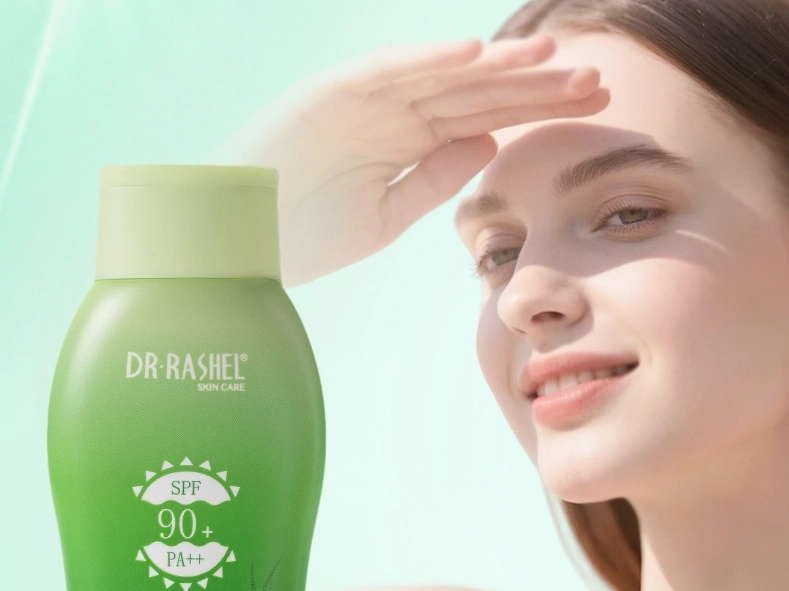
¿Ofrece un factor de protección solar (FPS) 90 una protección significativamente mayor que un FPS 50?
Desde un punto de vista matemático, la protección adicional entre 50 y 90 equivale a aproximadamente un 1 %. Un trabajador promedio que camina desde su coche hasta la oficina apenas notará esta diferencia. Sin embargo, algunas personas sufren de una sensibilidad solar severa. Otras viven en zonas de gran altitud. Para ellas, este 1 % representa una red de seguridad vital. En lugares como los Emiratos Árabes Unidos o las regiones de alta montaña, la radiación UV es significativamente más intensa. El uso diario estándar suele ser suficiente para la mayoría de los fototipos de piel, pero el factor de protección solar 90 existe para aquellos casos excepcionales donde la defensa natural de la piel es prácticamente nula.
Cómo elegir el formato adecuado: Spray solar vs. Crema solar
La elección entre un spray solar y una crema solar depende principalmente de tus hábitos diarios. Aun así, existen claras diferencias físicas en la forma en que se adhieren a la piel.
Las cremas solares crean una barrera protectora más gruesa. Esto las hace ideales para pieles secas. También funcionan bien en el rostro, donde se necesita una aplicación cuidadosa. Se frota físicamente la crema sobre la piel. Por lo tanto, se crea fácilmente una capa suave y sólida. En contraste, una spray solar Ofrece gran comodidad para cubrir todo el cuerpo. Permite retoques rápidos sobre el maquillaje. También es práctico para practicar deporte. El problema con los aerosoles es el viento y las zonas que quedan sin cubrir. La eficacia de ambos formatos depende totalmente del grosor de la capa aplicada sobre la piel. Si se aplica una capa ligera sin extenderla, es posible que solo se consiga un FPS efectivo de 10, independientemente de lo que indique el envase.
Desafíos comunes de las formulaciones con alto factor de protección solar (SPF)
Los productos con alto factor de protección conllevan problemas de ingeniería, especialmente en lo que respecta a la estética y la comodidad para la piel.
Cómo solucionar los problemas de "tono blanquecino" y textura.
Los filtros inorgánicos, como el dióxido de titanio en los protectores solares con FPS 90, pueden dejar un residuo visible en pieles más oscuras. Este aspecto pálido se debe a que la luz rebota en las partículas minerales de mayor tamaño. Hoy en día, las diminutas partículas micronizadas ayudan a solucionar este problema. Reducen el aspecto blanquecino sin comprometer la protección UV. Al disminuir el tamaño de las partículas, el mineral sigue bloqueando los rayos UV, mientras que la luz natural las atraviesa. Este proceso hace que el protector solar se vea transparente en el rostro.
Cómo controlar la posible sensibilidad de la piel
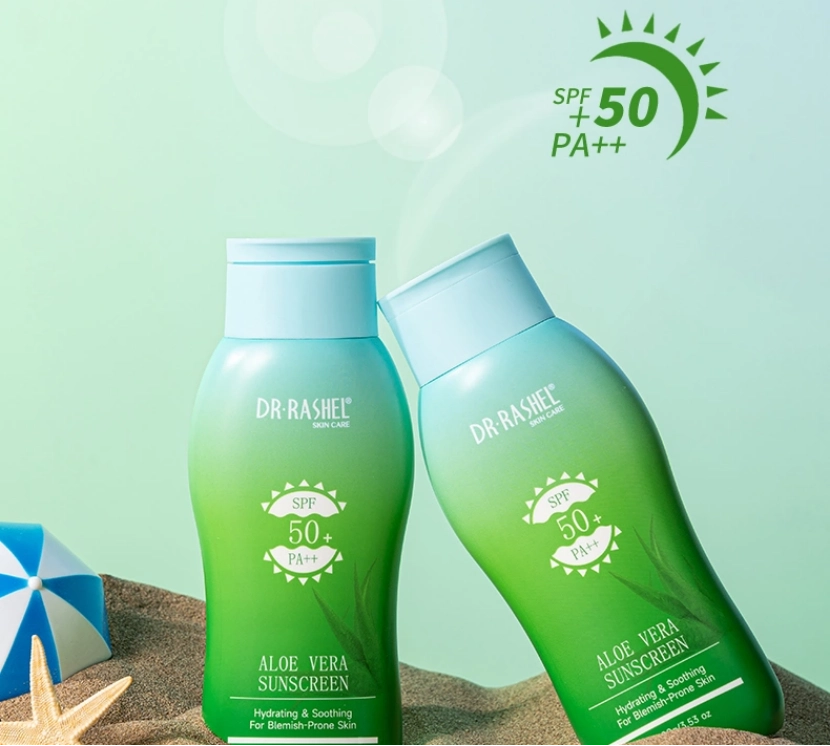
Grandes cantidades de filtros UV a veces pueden causar enrojecimiento en pieles sensibles. Esto crea una clara disyuntiva. Una mejor protección requiere más componentes activos. Agregar elementos calmantes como la vitamina C o Aloe Vera Ayuda mucho. Estos aditivos combaten la posible irritación causada por los químicos fuertes. El Dr. Rashel selecciona ingredientes de proveedores confiables de todo el mundo. La marca combina elementos naturales con componentes científicos de eficacia comprobada, lo que da como resultado productos altamente efectivos. Su meticuloso método garantiza que tu piel se mantenga calmada, incluso al usar un factor de protección solar (FPS) de 90.
Cómo optimizar tu rutina de protección solar
La protección solar es un hábito constante. Nunca es un paso aislado. Aplicar más loción cada dos horas es fundamental para la salud de la piel. De hecho, esto es más importante que el factor de protección solar (FPS) inicial. Si te aplicas FPS 90 a las 8:00 de la mañana y no te aplicas más, al mediodía ya no tendrás protección.
Aplica el protector solar como último paso de tu rutina de cuidado facial, antes de cualquier cosmético con color. Esto crea una capa uniforme sobre tu crema hidratante. La cantidad importa: la mayoría de las personas aplican menos de la mitad de la cantidad recomendada para alcanzar el factor de protección solar indicado en el envase. Para el rostro y el cuello, necesitas aproximadamente una cantidad del tamaño de una moneda de cinco centavos. La mayoría de las personas usa una gota del tamaño de un guisante, lo que reduce su FPS 50 a un FPS 15.
¿Tu tipo de piel requiere un tratamiento ultra? ¿Factor de protección solar alto?
No todo el mundo necesita el número más alto de la tienda. Sin embargo, algunos compradores lo requieren por razones médicas.
La piel muy pálida se beneficia enormemente de la protección adicional de un FPS 90. Esto ayuda durante los largos días de exposición al sol. Estos tipos de piel clara tienen muy poca melanina. Por lo tanto, no pueden absorber mucha energía UV de forma natural. Además, la piel necesita cuidados adicionales después de exfoliaciones químicas o tratamientos con láser. Los rostros en proceso de curación necesitan una protección total. Esto evita la formación de manchas oscuras posteriormente. La piel en proceso de curación reacciona muy fuertemente a la luz del día. Para entornos de oficina diarios, un FPS 50 crema solar Proporciona un equilibrio ideal entre protección y elegancia cosmética.
Preguntas frecuentes
P: ¿Puedo usar el protector solar del Dr. Rashel si estoy embarazada?
A: Le recomendamos consultar con un médico durante el embarazo o la lactancia. Debe hacerlo antes de usar productos nuevos. Esta recomendación es especialmente importante para fórmulas con ingredientes activos como retinoides o ácidos.
P: ¿Cómo puedo estar seguro de que mi protector solar Dr. Rashel es auténtico?
A: Todos los envases de los productos Dr. Rashel incluyen un código QR que enlaza directamente con nuestro sitio web oficial. Puede escanearlo para verificar su autenticidad. Asegúrese de que el dominio sea drrashel-bbg.com y que la información de contacto coincida con la de nuestra página oficial de "Contáctenos".
P: ¿El SPF 90 es demasiado fuerte para la piel grasa?
R: No necesariamente. Si bien los productos con un factor de protección solar alto pueden ser más densos, la gama del Dr. Rashel cubre necesidades como luminosidad y corrección de manchas, antiarrugas y reafirmación, suavidad y reparación, control de grasa y cuidado del acné, hidratación y humectación, y minimización de poros. Busca fórmulas para el control de grasa.
P: ¿Dónde se fabrican estos productos?
R: Los productos del Dr. Rashel se fabrican en China, en instalaciones de producción ubicadas en Guangzhou.


