
A private label skincare product line should be planned as a connected commercial system, not a list of attractive individual products. Start with one clear customer need, choose a small anchor range, add products that support the same routine or channel, and confirm that packaging, documentation, quality checks, and replenishment can work together.
For distributors, the useful question is not “How many SKUs can we launch?” It is “Which products can this market understand, sell, use, and reorder without unnecessary complexity?” The framework below turns that question into practical decisions.

How Does a Private Label Skincare Product Line Start?
The first step is to define the line’s commercial job. A distributor-ready range has a shared customer, a clear channel, compatible pack formats, and replenishment logic that sales teams can explain quickly.
Use a simple coherence test: if two proposed products target different customers, require different sales education, and move through different channels, they may belong in separate launch phases. A line can still cover several concerns, but its products should feel related in routine, visual identity, and market purpose.
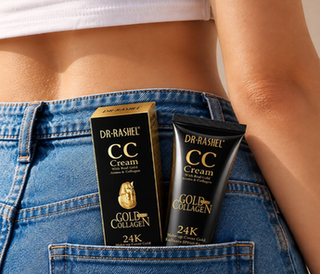
Dr. Rashel’s multi-category skincare portfolio shows why category breadth needs a structure. Face care, sun care, body care, hair care, baby care, makeup, and other personal-care categories can create opportunity, but a distributor still needs a focused entry point rather than a catalogue with no priority.
How Should You Choose Anchor Categories for a Skincare Product Line?
Choose one anchor category that solves the most visible market need, then decide which supporting products make the first purchase more useful or repeatable. The following structure is a planning tool, not a fixed SKU prescription.
Start with an Anchor Category
The anchor should give the line a clear entry point and a simple sales explanation. Ask which concern or routine brings customers in, then choose a format that fits the channel and expected use.
| Role | Purpose | Example Question |
|---|---|---|
| Anchor product | Gives the line a clear entry point | Which concern or routine brings customers in? |
| Supporting treatment | Extends the same concern or routine | What step naturally follows the anchor? |
| Daily-use support | Encourages repeat use | What product keeps the routine practical? |
| Seasonal or channel add-on | Fits a specific campaign or channel | What can be added without changing the line’s identity? |
Add Complementary SKUs
An illustrative starter line might combine a hydrating serum, a barrier-support cream, and a gentle cleanser for a pharmacy or beauty-store channel. A different market might justify a brightening or sun-care anchor. The point is to build around one recognizable need, then test whether each SKU strengthens the same customer journey.
The official Vitamin C and retinol day-and-night pairing demonstrates the logic of complementary use: two products can have different roles while sharing a visual and routine story. Treat such examples as assortment inspiration, not as a promise that every existing branded product is available for private label customization.
How Do Ingredients and Skin Concerns Shape the Product Mix?
Ingredients should follow the market problem, product format, and evidence plan. Use the following mapping sequence to connect the commercial need with the product brief.
Map Concerns to Product Formats
Start with the local concern and choose the format that fits the routine:
Identify the local concern, such as dehydration, uneven tone, excess oil, or visible signs of aging.
Choose the format that fits the routine: cleanser, serum, cream, lotion, mask, or sun-care product.
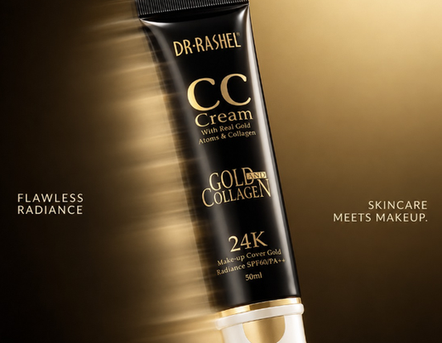
Select an ingredient story that is understandable and appropriate for the formula, such as Vitamin C, Niacinamide, Hyaluronic Acid, PDRN, Collagen, or 24K Gold.
Match Claims to Evidence
Match every consumer-facing claim to the testing, label, and market requirements that support it.
This sequence prevents an ingredient from becoming the entire strategy. A brightening active may attract attention, but the line still needs a usable texture, suitable pack, clear instructions, and a second product that makes the routine coherent. Dr. Rashel’s stated concern areas include brightening and spot correcting, anti-wrinkle and firming, soothing and repair, oil control, hydration, and pore refining. Those categories can guide local-demand research without assuming that one formula fits every country.
How Should You Plan Skincare Packaging and Export Documents?
Packaging decisions should be made at line level. Ask how each package performs in use and how the complete range moves through approval and export.
Coordinate Packaging Across SKUs
A distributor should compare dispensing, material compatibility, artwork changes, shipping durability, and shelf presentation across all planned SKUs. A beautiful jar that leaks in transit or cannot carry the required language creates a line problem, not just a packaging problem.
Prepare Market Documents
Build a version-controlled artwork file for every SKU. Confirm the INCI list, net content, batch information, responsible-party details, warnings, and language requirements for each destination. Keep testing reports, safety files, and other compliance documents tied to the exact formula and package version being sold.
Transport planning matters as well. Heat, cold, vibration, and long storage can affect texture, seals, pumps, and printed cartons. Dr. Rashel’s service workflow includes packaging and transportation planning, quality inspection, and after-sales support. The practical question for any supplier is how those steps connect when an artwork file, component, or formula changes after sampling.
How Can You Evaluate a Skincare Manufacturing Partner?
Review the partner against the complete line workflow, not only a sample photograph. Focus on operational support and control of project decisions after sampling.
Review the Full Workflow
Ask how the team handles product development, sample feedback, quality inspection, batch records, packaging coordination, documentation, change control, and post-launch communication.
The company’s export-oriented production and quality background is relevant when a distributor needs support across markets and categories. Its service information also identifies business, design, quality-inspection, packaging-and-transportation, and after-sales roles. Look for evidence that these functions communicate with one another rather than operating as isolated handoffs.
Confirm Ownership and Change Control
An established overseas agent and distributor pathway can also help clarify the commercial route. Before launch, decide who owns the product brief, who approves samples, who controls artwork, and who receives updated technical documents.
FAQ
These questions address common decisions that follow once a distributor has a first product-line structure.
How Many Products Should a New Distributor Launch?
There is no universal number. Start with the smallest range that proves one customer need, one sales channel, and one replenishment story. Add products when they strengthen that system and when operations can support their packaging, documents, and stock separately.
Which Ingredients Should a Private Label Line Prioritize?
Begin with the target market’s skin concerns and preferred formats. Then choose ingredients whose role can be explained clearly and supported by the intended formula, testing, label language, and documentation. An ingredient trend alone is not a complete product strategy.
What Packaging Details Matter Across a Skincare Range?
Check dispensing, compatibility, artwork space, language, batch identification, transport durability, and revision control. Use the final formula and final package for compatibility checks, and keep each technical file tied to the version that will ship.
Can Private Label Include Both Existing and Customized Products?
It can, when the supplier defines the available base formulas, customization boundaries, artwork process, ownership, and approval steps for each SKU. Treat existing branded products and customized products as separate commercial decisions until the written scope connects them.
What Should a Distributor Ask a Skincare Supplier First?
Ask how development, samples, quality inspection, packaging logistics, documentation, changes, and after-sales support work across the complete line. Also ask which project details the supplier needs before recommending formulas or formats for the target market.
Start a Distributor-Ready Product Line with Dr. Rashel
Prepare a portfolio brief with the target market, customer channel, lead category, supporting SKUs, preferred formats, packaging direction, and documentation needs. To start a portfolio discussion, use those inputs to focus the first conversation on a coherent line, its operating requirements, and the next development decision.


