
Open a serum shelf and the percentages are doing the selling. Five on one bottle. Ten on the next. Most shoppers reach for the bigger number without reading past it. Does higher concentration really deliver better results? Not automatically. The number on the front label isn’t the full story — what the whole formula delivers, how the skin tolerates it, and what studies actually measured all count. Below: 5% versus 10%, with the two strengths kept apart where the studies do.
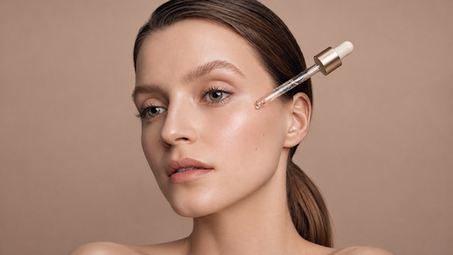
What Does Niacinamide Actually Do for Your Skin?
It’s vitamin B3 — the form your skin cells already run on in normal metabolism. A serum just gives that existing process a push.
Two mechanisms carry most of the niacinamide benefits. First, it supports the skin barrier and helps water stay where it belongs — the reason a serum is chosen to support the skin barrier. Second, it slows the transfer of melanosomes, the pigment packets that move from melanocytes to nearby cells. Fewer packets move across, and the tone looks more even — which is exactly why niacinamide for dark spots gets searched so much.
Dullness, uneven texture, fine lines, visible redness — the rest follows from those two jobs. Comparing it with vitamin C? The difference between niacinamide and vitamin C is worth a read first — they act on skin differently.
Niacinamide 5% vs 10%: What Is the Difference?
Start with 5%. Why start there? It is the strength that appears in the human studies on facial skin, and that is where most topical niacinamide data comes from. Ten percent is popular for a different reason — a bigger number reads as stronger, and that sells.
Twice the concentration, twice the results? No — that math doesn’t apply to skin. Delivery is the variable: the vehicle, the pH, the other actives sharing the bottle decide how much actually reaches the working layers. Two "10%" serums can land very differently on the same face.
|
Comparison |
5% Niacinamide |
10% Niacinamide |
|---|---|---|
|
Concentration |
Moderate |
Mais alto |
|
Evidence |
Several human studies |
Some evidence, often in combination formulas |
|
Skin concerns |
Uneven tone, dullness, skin appearance |
Similar cosmetic goals |
|
Suitability |
A practical starting option |
May suit users who already tolerate niacinamide |
|
Key consideration |
Formulation and consistency |
Higher concentration does not guarantee better results |
Here is the quiet variable: consistency. A 5% serum used nightly for two months gets further than a 10% bottle that’s been sitting in the drawer since the first stinging week.
What Does the Clinical Evidence Actually Show?
Clinical Evidence for 5% Niacinamide
The 5% strength has the cleaner data. Where does it come from? A 2002 clinical study, 18 participants with hyperpigmentation, a 5% niacinamide moisturizer against its plain vehicle — the formula minus the active. The darkened areas improved on the niacinamide side. Then a second study: 12 weeks, 50 women, improvements in fine lines, hyperpigmented spots, texture, and redness. Weeks of daily use — not days.
What Research Says About 10% Niacinamide
The 10% side holds less. A 2024 randomized clinical trial mixed 10% niacinamide with 5% magnesium ascorbyl phosphate and 5% hyaluronic acid, and melasma improved in the participants who used the formula. But three actives worked together in that study. So where is niacinamide’s own contribution? Nowhere in the design — and 5% was never tested against 10% in it.
Does Higher Concentration Mean Better Results?
So which is better on paper? Right now, the question is unanswerable. The 5% evidence comes from studies testing 5% alone. The 10% evidence comes mostly from combination formulas. Nothing in either set proves that doubling the percentage improves the result. Five percent has the cleaner record. Ten percent has the bigger label.
Who Should Choose 5% or 10% Niacinamide?
When to Choose 5% Niacinamide
New to niacinamide? 5% is the sensible entry — the concentration the studies used, covering the usual starting complaints: dullness, uneven tone. A moderate strength you can use daily without thinking? Same answer.
When to Consider 10% Niacinamide
Who should consider 10%? People who already use niacinamide without a reaction. Those who prefer stronger formulations. The final call belongs to the whole formula and your skin — a 10% serum in a mild vehicle can sit better than a 5% one loaded with fragrance, and the reverse happens too.
One universal best concentration? There isn’t one. Tolerance decides, and tolerance differs across skin types.
How to Use Niacinamide Serum in Your Daily Skincare Routine
Four steps, short enough to actually keep doing.
Wash the face with a gentle cleanser.
Press a few drops of the niacinamide serum into the skin.
Moisturizer after that, to seal the layer in.
During the day: broad-spectrum sunscreen on top.
A small amount, clean skin, patience while it absorbs — the basics of applying face serums carry straight over.
For sensitive skin, a few days a week first, building up; a patch test on the inner forearm is cheap insurance. Retinol in the evenings? A breakdown of using niacinamide and retinol together settles the order and spacing. One new ingredient at a time — otherwise the cause of any change stays a guess.
Why Consider Dr. Rashel Niacinamide Super Serum?
A 5% Niacinamide Formula for Everyday Skincare
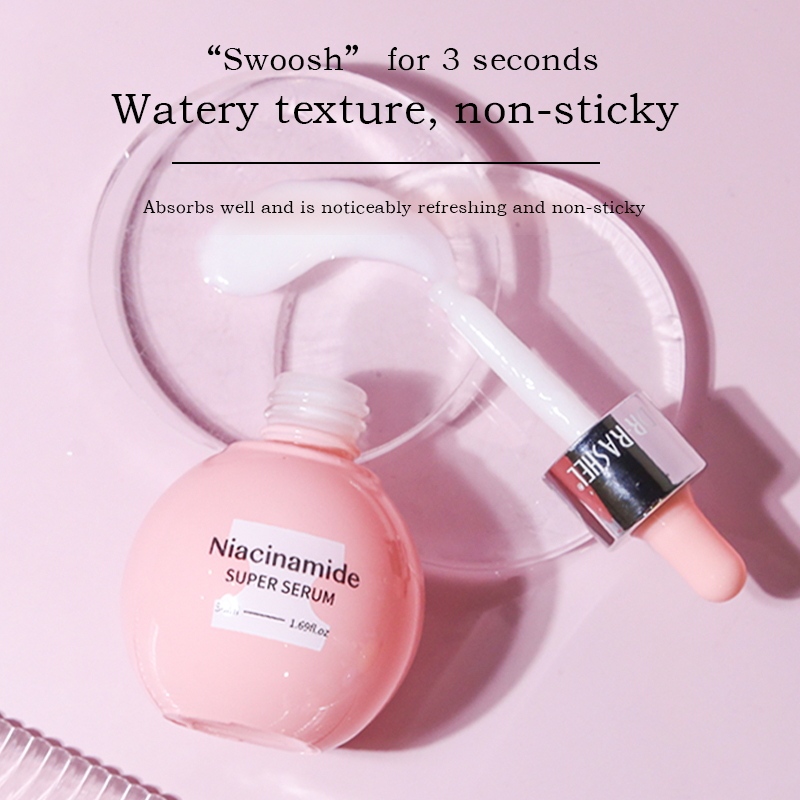
The evidence above keeps pointing at the same practical number. The Dr. Rashel Niacinamide Super Serum is built around a 5% niacinamide concentration, aimed at dull-looking skin, dark spots, and uneven tone — a routine meant to be repeated daily rather than occasionally endured.
Supporting Ingredients in the Formula
Glycerin? A humectant — it pulls water toward the skin and holds it there. Arbutin joins as a complementary ingredient in brightening-focused skincare. Sodium hyaluronate keeps hydration where it belongs. And tocopherol, vitamin E, adds its antioxidant properties.
How to Incorporate It Into Your Routine
3–4 drops to the face and neck after cleansing — morning and evening, before the moisturizer.
Looking for a niacinamide serum for your daily skincare routine? Explore the Dr. Rashel Niacinamide Super Serum and discover a 5% formula designed to support brighter, more even-looking skin.
Final Thoughts: Is 5% or 10% Niacinamide Better?
Five percent carries the cleaner evidence. Ten percent is a higher starting point, not a proven upgrade. In the end, formulation, skin tolerance, and consistency decide how a serum performs — and for everyday skincare, the 5% formula in the Dr. Rashel Niacinamide Super Serum is a reasonable place to start.
Frequently Asked Questions About Niacinamide Serums
Is 10% Niacinamide Twice as Effective as 5%?
No. Double the percentage doesn’t double the result. Delivery, the rest of the formula, and your skin’s tolerance all change what it does. Head-to-head data? There isn’t any.
How Long Does Niacinamide Take to Show Results?
It varies by person and by concern — but the studies all point to several weeks of consistent use. A full month of daily use is the minimum before judging anything.
Can Beginners Use 5% Niacinamide Serum?
Yes — five percent is a practical starting concentration, and it is the one most human studies used. Tolerance varies, though. Patch test; ease in.


