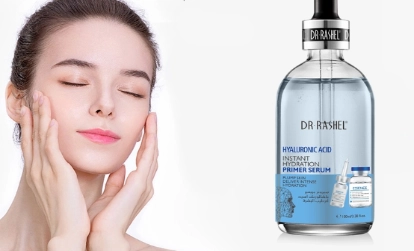
You’ve seen the brightening aisle. Vitamin C is pre-sold — shoppers reach for it before anyone argues for it, which is exactly why private label brands chase it. The market is already convinced. Your job: a routine worth reordering — a coordinated Vitamin C skincare line, not a single serum.
1. Identify Your Target Market and Product Positioning
Who’s the buyer? Start there, not with the bottle.
A price comparison shopper? Mass market: visible value, simple claims, familiar formats. Reads the ingredient panel? Premium — the back of pack story sells it. A professional user? She wants concentrated actives.
Where she shops changes everything: a light texture market walks past a heavy cream; a drier climate buys it.
Write the positioning in one sentence a rep can repeat. If you can’t, the line has no anchor.
2. Choose the Right Vitamin C Ingredient and Formulation Strategy
What catches most first time briefs out? "Vitamin C" isn’t one ingredient.
Pure L-Ascorbic Acid: fussy, low pH, water soluble only. Light and air fade it. So the formula has to be built around the active.
The workaround is derivatives — a little raw punch traded for stability. 3-O-Ethyl Ascorbic Acid is the usual answer — it tolerates a wider pH range, surviving in creams where the pure acid gives up.
Which form do you need? The format and performance goal decide — and the customer. Compare our Vitamin C brightening & anti-aging face serum: 3-O-Ethyl Ascorbic Acid with vegan hyaluronic acid and corn gluten amino acids. An experienced skincare manufacturer should own calls like that.
3. Build a Complete Vitamin C Skincare Product Range
Why more than one hero product? A serum sells once. A routine sells every morning.
Who does the serum customer ask for next? The rest of the job. Launch a cleanser, serum, and cream:
|
Product |
Role in the skincare line |
|---|---|
|
Vitamin C Facial Cleanser |
Daily cleansing |
|
Vitamin C Toner |
Preparation and hydration |
|
Vitamin C Serum |
Hero treatment product |
|
Vitamin C Day Cream |
Daily moisturizing |
|
Vitamin C Night Cream |
Nighttime skincare |
|
Vitamin C Eye Serum |
Targeted eye area care |
|
Vitamin C Facial Mask |
Additional skincare treatment |
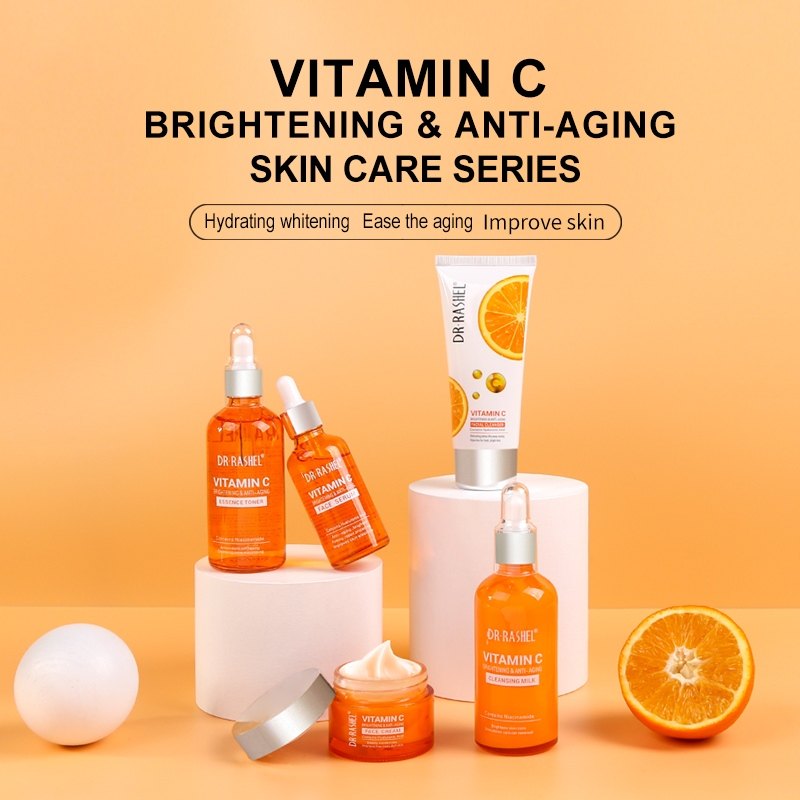
The Vitamin C Brightening Anti-Aging Skin Care Series puts the full routine in one box. The Vitamin C facial cleanser comes off the shelf first. Gift sets and travel sizes add combinations without new development.
Keep branding, ingredient story, and target customer consistent — a drifting line reads like a catalogue, a consistent one like a brand.
4. Combine Vitamin C with Complementary Skincare Ingredients
What is the rest of the formula actually for?
Every supporting ingredient needs a job. Niacinamide? Brightening — it leans into the same story vitamin C is already telling. Hyaluronic acid and glycerin? Hydration, so the product doesn’t feel tight. Ceramides? Barrier support — it matters while skin is under active treatment.
Now the discipline part. Adding an active for the label is the trap: an ingredient without a purpose complicates the formula and blurs what the product is for. Test compatibility before you commit — not every ingredient tolerates the pH the active needs.
5. Select Suitable Packaging and Brand Design
Packaging protects the formula first. A clear dropper bottle on a lit shelf has already lost — vitamin C is sensitive to light and air. Ask for an airless pump, or amber glass.
Match the pack to the format: dropper for the serum, tube for the cleanser, jar for the cream. The label carries brand colors, product information, a look that holds across the range.
One question before you order: will the package survive the channel? Retail shelves, sorting hubs, ocean crossings — each one stresses the pack differently.
6. Establish Quality Control and Product Stability Testing
Where do vitamin C lines fall apart? Quietly. Over shelf life. The active degrades, and no one notices until a customer does.
So the process has to prove the active stays in the product to the last week of use. First, raw materials — documentation checked, incoming ingredients inspected before they enter a batch. Then stability testing: change the temperature and humidity, and watch what happens — color darkens, odor shifts, pH wanders, viscosity thins, active content quietly drops. Check microbial safety and preservative performance, plus packaging compatibility — a formula that reacts with its own pack hasn’t been solved.
The bar that matters most is consistency: stable on the bench but drifting batch to batch is the classic failure.
7. Check Product Claims, Labeling, and Market Compliance
Claims get risky fast. Which ones draw regulatory attention? Brightening, antioxidant protection, skin tone, visible signs of aging — the moment the testing behind them lags.
The fix is unglamorous: accurate INCI lists and labels on every product, plus a check of local rules per destination.
Don’t assume the paperwork travels. The EU, the US, and the Middle East each ask for something different — restrictions, languages, registrations. Assume every market differs until proven otherwise.
No unsupported medical claims, no exaggerated whitening promises — those lines never cross.
8. Choose the Right OEM/ODM Skincare Manufacturer
The manufacturer decides how much you control — and how much you depend on.
Weigh three things first: R&D capability, production experience, the quality management system. Then check what it takes on — existing formulas? Custom? Both?
Dr. Rashel’s OEM/ODM service covers packaging design and sampling for confirmation — where a project gets settled. Then the practical numbers: MOQ, lead times, technical documentation. Press on how raw materials get checked, production monitored, the finished product verified. Round out the picture with communication, logistics, after sales support.
9. Test Samples and Prepare for Mass Production
Confirm an order on a data sheet? Don’t.
Pull the samples and judge them by hand — how the texture sits, whether the fragrance holds, how the product behaves in use. Feedback at this stage is specific and cheap. The same changes cost real money once tooling is ordered.
Then lock it down: final specs, artwork, quality standards — in writing. Arrange pilot production, check against the approved sample, and plan inventory, schedules, logistics — so the first order ships.
Frequently Asked Questions About Private Label Vitamin C Skincare
What products should a Vitamin C skincare line include?
A cleanser, a serum, a moisturizer — the launch set. A toner or an eye product or a mask can follow once the routine grows.
Can private label manufacturers customize Vitamin C serum formulations?
Usually yes. Active form, concentration, texture, and fragrance are all adjustable — existing formula or new.
How do you ensure the stability of Vitamin C skincare products?
Pick a stable form of the active, shield it from light and air, run stability testing across temperature and humidity, and check every batch.
Conclusion
Build it in the order above — market, formulation, range, packaging, quality — and each step holds the next. For OEM/ODM or private label customization, start at Dr. Rashel’s contact page. Bring the target market, the product plan, the expected volume.