Packaging changes, and box color alone is weak evidence.
A better check combines the anti-counterfeit code with physical details.
Why Is It Important to Verify Dr. Rashel Products?
An unknown formula in a copied bottle may look familiar and still behave differently on skin.
Verification also separates normal variation from a counterfeit. A slightly different orange may come from printing or photography. A missing security label is more serious. The useful question is not “Does it match one photo?” It is “Do the traceability and manufacturing details agree?”
How Do You Check If a Dr. Rashel Product Is Original or Fake?
Use the same four checks across Dr. Rashel products. The code provides the digital check; embossed and molded marks provide physical confirmation.
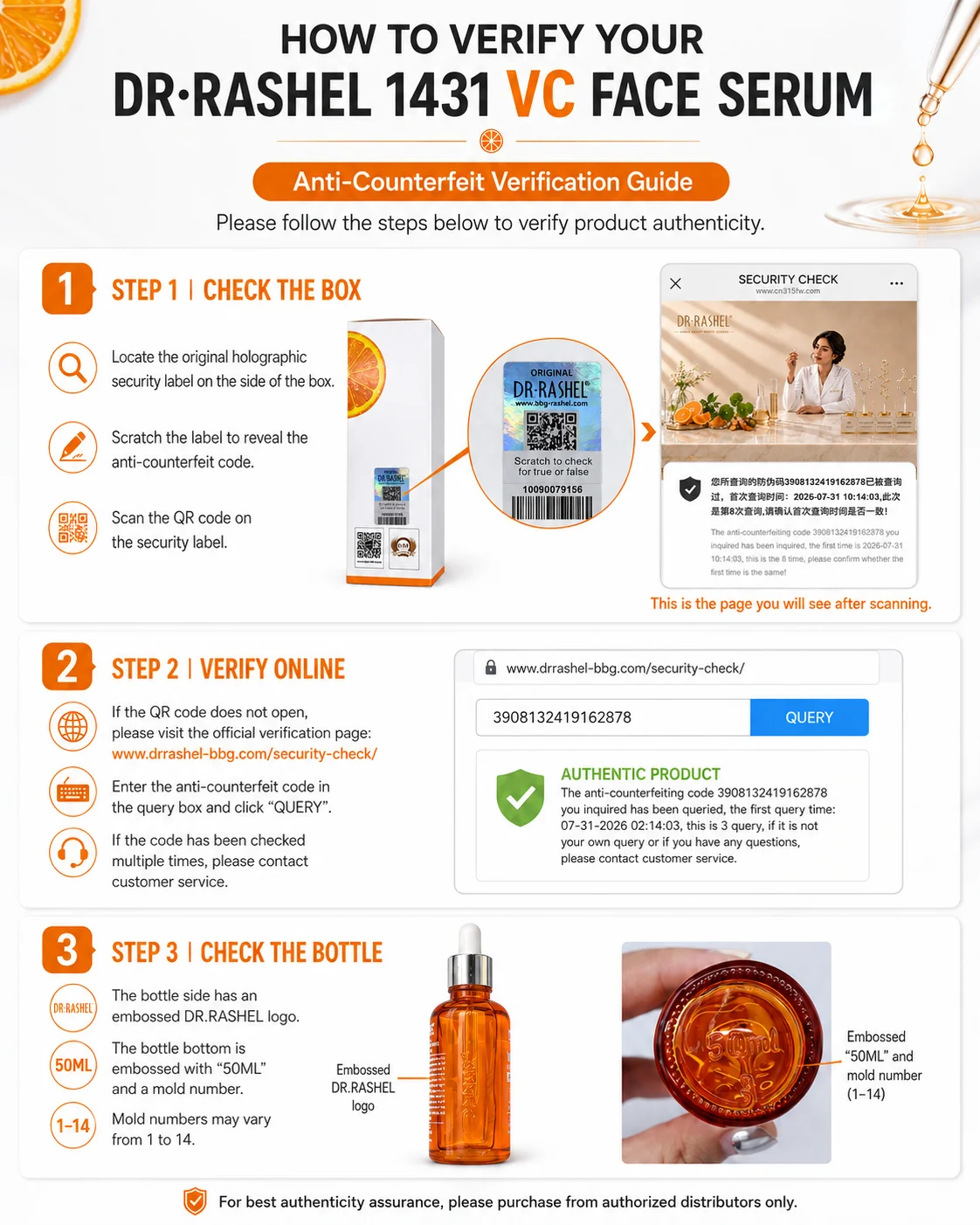
Step 1 — Find the Anti-Counterfeit Code on the Packaging
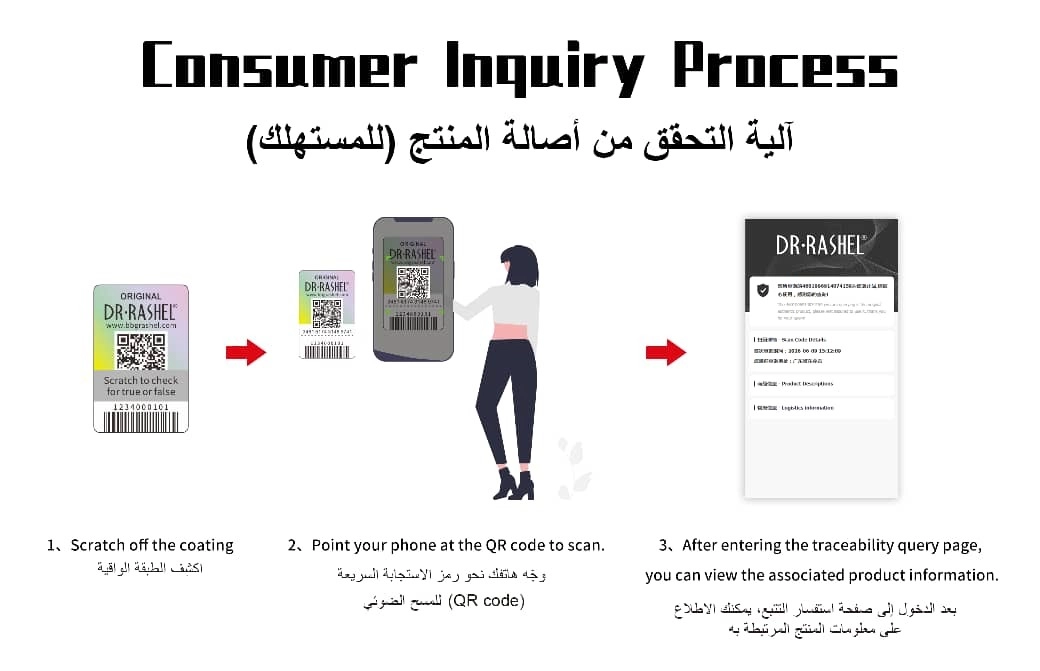
Look for the anti-counterfeit label on the outer box. It may include a barcode, QR code, or security number. Scratch the coating carefully so the information remains readable.
A label that is already exposed, torn, or covered by another sticker deserves attention. It does not prove the product is fake, but the verification chain is broken.
On a DRL-1431 serum, check the label before opening and keep the box.
Step 2 — Enter the Code on the Official Security Check Page
Open the official Dr. Rashel Security Check page and enter the barcode or security number shown on the label. Type it directly from the package. One wrong digit can produce a failed result.
The returned information should correspond to a Dr. Rashel product. For DRL-1431, compare it with the official identity: Vitamin C Brightening & Anti-Aging Face Serum, reference DRL-1431, 50ml.
Avoid third party verification pages; a copied site can display a convincing result.
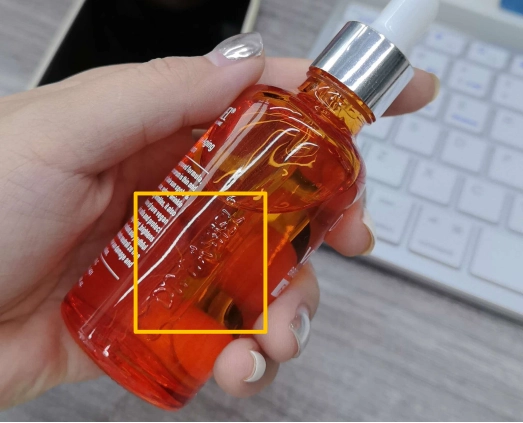
Step 3 — Check the Embossed Dr. Rashel Logo on Newer Batches
Products from batches after May 11, 2025 should carry an embossed Dr. Rashel logo. The mark should be physically raised or pressed into the material, not only printed.
Tilt the package under a lamp and feel the logo. An embossed mark has depth.
An earlier batch should not be rejected because it follows an older packaging specification. The same date rule applies to DRL-1431.
Step 4 — Inspect the Markings on the Bottom of the Bottle
Turn the bottle over. On a 50ml bottle, including DRL-1431, the base should show an embossed “50ml” marking and a bottle mold number from 1 to 14.
The mold number identifies a production cavity, so genuine bottles may differ. A “3” is not more original than an “11.” The number should be molded, not randomly printed.
A customer receives a DRL-1431 serum from an online seller. The box looks darker than the product photo. That says very little.
The useful checks are simple:
- Enter the anti-counterfeit code on the official page.
- Match the result with the DRL-1431 product information.
- Check the batch date and embossed logo requirement.
- Confirm the molded “50ml” mark and a mold number from 1 to 14.
The same process applies to other Dr. Rashel products.
How Should You Interpret the Verification Results?
A valid code with matching product information is strong evidence. Expected physical markings make the result more convincing.
A code that returns no information should be checked again for typing errors. Still no result? Do not apply the product until the seller or brand reviews it.
A valid code paired with strange packaging needs closer inspection. Check the batch date, packaging version, and whether the label appears transferred. One passing signal should not cancel several conflicting ones.
Can Packaging Differences Mean a Dr. Rashel Product Is Fake?
Not automatically. Carton color, text spacing, label position, and cap finish can vary between production runs.
Structural details carry more weight. A batch date that fits the packaging version makes sense. So does a molded capacity mark and a code that returns matching information.
A bottle with perfect colors but no usable traceability is less convincing than one with a minor print variation and a complete verification trail.
What Should You Do If You Suspect a Fake Dr. Rashel Product?
Stop using it, especially if the texture, odor, or skin response seems unusual. Keep the box, bottle, label, receipt, shipping information, and seller listing.
Take clear photos of:
- The anti-counterfeit code and result
- The batch information and embossed logo
- The bottom of the bottle
- The front and back packaging
Contact the seller and Dr. Rashel through the official website. Describe the inconsistency plainly. For example: “No results were found after entering the code, and there is no molded capacity marking on the bottom of the bottle.”
How Can You Avoid Buying Fake Dr. Rashel Products?
Buy through official or authorized channels when possible. A large discount is not proof of fraud, though a very low price combined with unclear sourcing is a fair warning.
Check the security label when the parcel arrives. Do not discard the box before verification. A return is easier when the product is unopened and the evidence is intact.
Marketplace reviews do not authenticate the bottle in your hand.
Conclusion
Check the code on the official Dr. Rashel page. Then inspect the batch date, embossed logo, and bottle base. For a 50ml product such as DRL-1431, look for the molded “50ml” mark and a mold number from 1 to 14.
A genuine product should tell a consistent story across these details.
Frequently Asked Questions About Dr. Rashel Authenticity
A few details cause repeated confusion because buyers often compare one package with a single image online.
Q: Does a Missing Embossed Logo Mean the Product Is Fake?
No. The embossed logo requirement applies to batches after May 11, 2025. Earlier batches may use older packaging. Check the batch date and security code before judging.
Q: Should Every Original Bottle Have the Same Mold Number?
No. The expected mold number can range from 1 to 14. Different numbers can appear on genuine bottles because they come from different mold cavities.
Q: Is Packaging Appearance Enough to Confirm Authenticity?
No. Appearance is supporting evidence. The official security check, batch related features, molded capacity, and mold number are more useful together.
Q: Can I Verify a Product After Opening It?
Yes, provided the anti-counterfeit code and packaging are still available. Verification before opening is better because the product can remain unused if something looks wrong.