A sunscreen routine can work indoors and fail ten minutes outside. Heat increases sweating. Humidity slows how sweat dries. Add moisturizer. Add a crowded commute too. Then the face may feel coated before breakfast.
The answer is not to skip daily sunscreen. Create a lighter routine. Use enough product. Plan for reapplication during the day.
Why Is Sunscreen More Difficult to Wear in Hot and Humid Weather?
Sunscreen needs to form an even film. Sweat creates gaps around the hairline, upper lip, nose, and neck. Oil may cause products to shift. Towels, collars, phones, and repeated face touching remove more product than people notice.
Too many layers create another failure point. A thick cream may roll into flakes, while foundation lifts the layer underneath. Texture, layer count, and drying time matter almost as much as the SPF label.
What Type of Sunscreen Works Best in Hot and Humid Weather?
The target is broad protection in a texture that can be applied generously.
Look for Broad Spectrum Protection
Choose broad spectrum protection against UVA and UVB rays. The American Academy of Dermatology recommends SPF 30 or higher and reapplication about every two hours outdoors, as well as after swimming or sweating.
SPF 50 is a sensible option for long commutes, outdoor work, and beach days. A higher number does not replace adequate coverage.
Choose a Lightweight, Fast Absorbing Texture
Fluid lotions and lightweight creams usually behave better in humidity than dense, waxy layers. Oily or acne prone skin may do better with “oil free,” “non-comedogenic,” or “non-greasy” formulas.
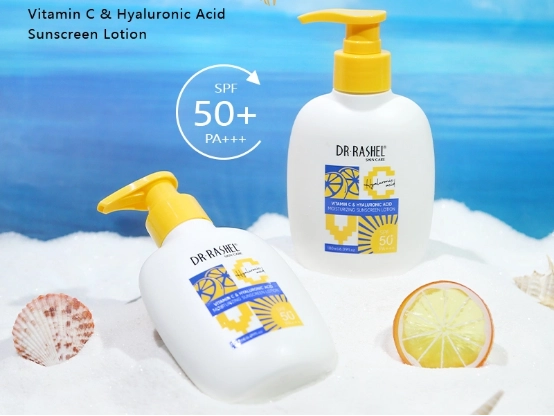
Dr. Rashel’s Vitamin C & Hyaluronic Acid Sunscreen Lotion SPF 50 is one relevant example. Its quick absorption, oil free, non-comedogenic, and non-whitening properties address common skin problems in humid weather: oiliness, clogged pores, and residue.
Consider Water and Sweat Resistance
Water resistance helps during exercise, swimming, outdoor work, or a sweaty commute. It does not mean all day waterproof protection.
Check the label for its tested resistance period. Reapply after swimming, heavy sweating, or towel drying. A lotion works well as the morning base; a compact format is easier for touch ups later.
What Is the Best Morning Sunscreen Routine for Humid Weather?
Think of the routine as a stack. Every layer needs a job. When two products do the same job, one can usually be removed.
Step 1: Cleanse Without Over Stripping the Skin
Use a gentle cleanser to remove overnight oil and residue. The face should feel clean, not tight.
A harsh cleanser can lead to discomfort, then a heavier moisturizer: stripped skin, thick cream, sliding sunscreen. A mild gel or low foam cleanser is often enough.
Step 2: Keep Skincare Layers Light
Use one treatment serum when it serves a clear need. A hydrating serum may help dehydrated skin. An antioxidant serum may suit uneven tone. Several sticky serums under sunscreen rarely improve a 7 a.m. routine.
Oily skin may need only serum and sunscreen. Dry skin may need a thin lotion between them. Apply moisturizer mainly where dryness appears.
A useful check: if the skin still feels wet or tacky after several minutes, the stack is probably too heavy.
Step 3: Apply Enough Sunscreen
Cover the face, neck, ears, hairline, and exposed chest. The two finger method is a practical estimate for the face and neck, though face size and product texture vary. Watch for thin patches around the nose and jaw.
Apply body sunscreen before dressing to catch the edges around sleeves and necklines.
Step 4: Let Each Layer Set
Let skincare settle before sunscreen, then give the sunscreen film time to set before makeup, masks, helmets, or clothing touch it.
A few minutes spent brushing teeth or packing a bag may be enough. Press foundation on rather than aggressively buffing it. If sunscreen begins to roll, stop. More rubbing usually makes the problem worse.
How Should You Reapply Sunscreen When You Are Sweating or Wearing Makeup?
Reapplication works better on a controlled surface. Do not spread fresh sunscreen directly over beads of sweat and oil.
- Blot sweat with a clean tissue; do not scrub.
- Remove obvious dirt or salt buildup.
- Reapply lotion evenly on bare skin.
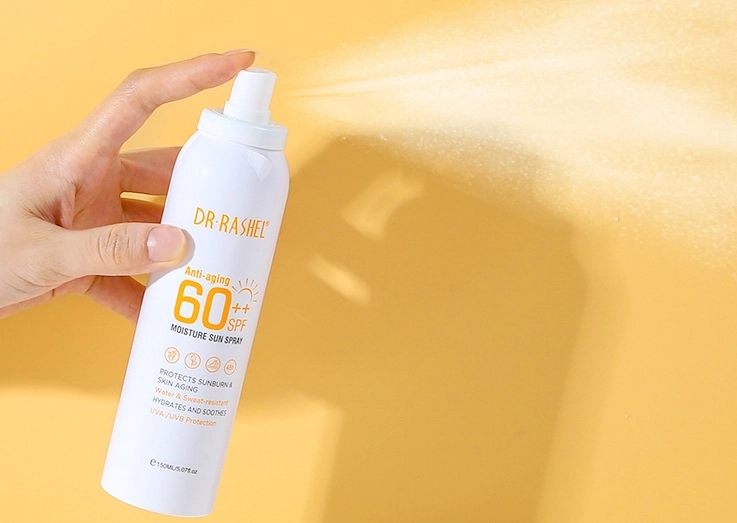
- Use a stick for small exposed areas or spray for the body.
- Restore makeup after the sunscreen settles.
Sunscreen sprays are convenient for arms and legs, but coverage is hard to judge. Apply generously and avoid inhaling mist around the face.
How Can You Prevent Sunscreen from Feeling Greasy or Pilling?
Pilling usually begins with excess product, incompatible textures, or too much rubbing.
- Reduce unnecessary morning layers.
- Use less serum and moisturizer, but not less sunscreen.
- Let each layer settle.
- Do not mix sunscreen with foundation or moisturizer.
- Blot oil before reapplication.
If pilling happens every morning, replace one layer at a time. Changing three products together makes the cause impossible to identify.
Should You Change Your Sunscreen Routine for Different Skin Types?
Yes, though the core rules stay the same: broad spectrum protection, adequate coverage, and timely reapplication.
| Skin Type | Recommended Texture | Routine Adjustment |
| Oily or acne prone | Gel, fluid, or light lotion | Skip heavy moisturizer or use it only on dry areas |
| Dry | Moisturizing lotion or light cream | Add a hydrating serum or thin moisturizer |
| Sensitive | Simple, fragrance free formula | Limit active ingredients and patch test |
| Combination | Lightweight lotion | Adjust moisturizer by facial area |
Barrier stressed skin may prefer a soothing formula. Dr. Rashel’s Centella & Ceramide Soothing & Repair Sunscreen SPF 50 is presented as lightweight and non-greasy. It fits the point where someone needs sun protection but finds complex brightening routines irritating.
What Sunscreen Mistakes Should You Avoid in Hot Weather?
Common mistakes are ordinary:
- Applying a thin layer because the full amount feels uncomfortable
- Missing the ears, neck, hairline, or chest
- Treating makeup with SPF as the whole sunscreen layer
- Wiping sweat away and forgetting to reapply
- Assuming high SPF lasts all day
- Applying several rich products beneath sunscreen
- Ignoring hats, shade, sunglasses, and protective clothing
Cloud cover is not a reliable routine switch. Sunscreen works better as a daily system.
Conclusion: Build a Routine You Can Follow Every Day
A humid weather routine should be boring in a useful way: gentle cleanser, limited skincare, enough sunscreen, a short setting period, and a realistic reapplication method.
Lotion works well as a morning base. A stick handles exposed facial areas during the day. Spray is practical for larger body areas when applied carefully.
You can explore Dr. Rashel’s lightweight sunscreen lotions, portable sunscreen sprays, sticks, and higher SPF options according to you skin needs and expected sun exposure. The aim is not to choose the strongest looking label, but to find a formula that can be applied generously and reapplied without disrupting the rest of the routine.
FAQ
Q: Can sunscreen replace moisturizer in humid weather?
It can for some oily or combination skin types. Dry or dehydrated skin may still need a thin lotion underneath.
Q: How long should sunscreen set before makeup?
Allow several minutes, or until the surface no longer feels wet. Makeup should press on without dragging the layer below.
Q: Should sunscreen be reapplied indoors?
It depends on exposure. Someone away from windows has different needs from a person driving, sitting beside strong daylight, or moving indoors and outdoors.
Q: Is a sunscreen stick enough for the whole face?
It can be, but even coverage requires several passes. Sticks are often easier for touch ups than for the morning application.
Q: What if sunscreen stings when sweating?
Rinse if irritation continues and stop using it around the eyes. Try a gentler formula and seek professional advice if the reaction is persistent or severe.